
Post date
Jul 14, 2026

Post date
Jul 14, 2026
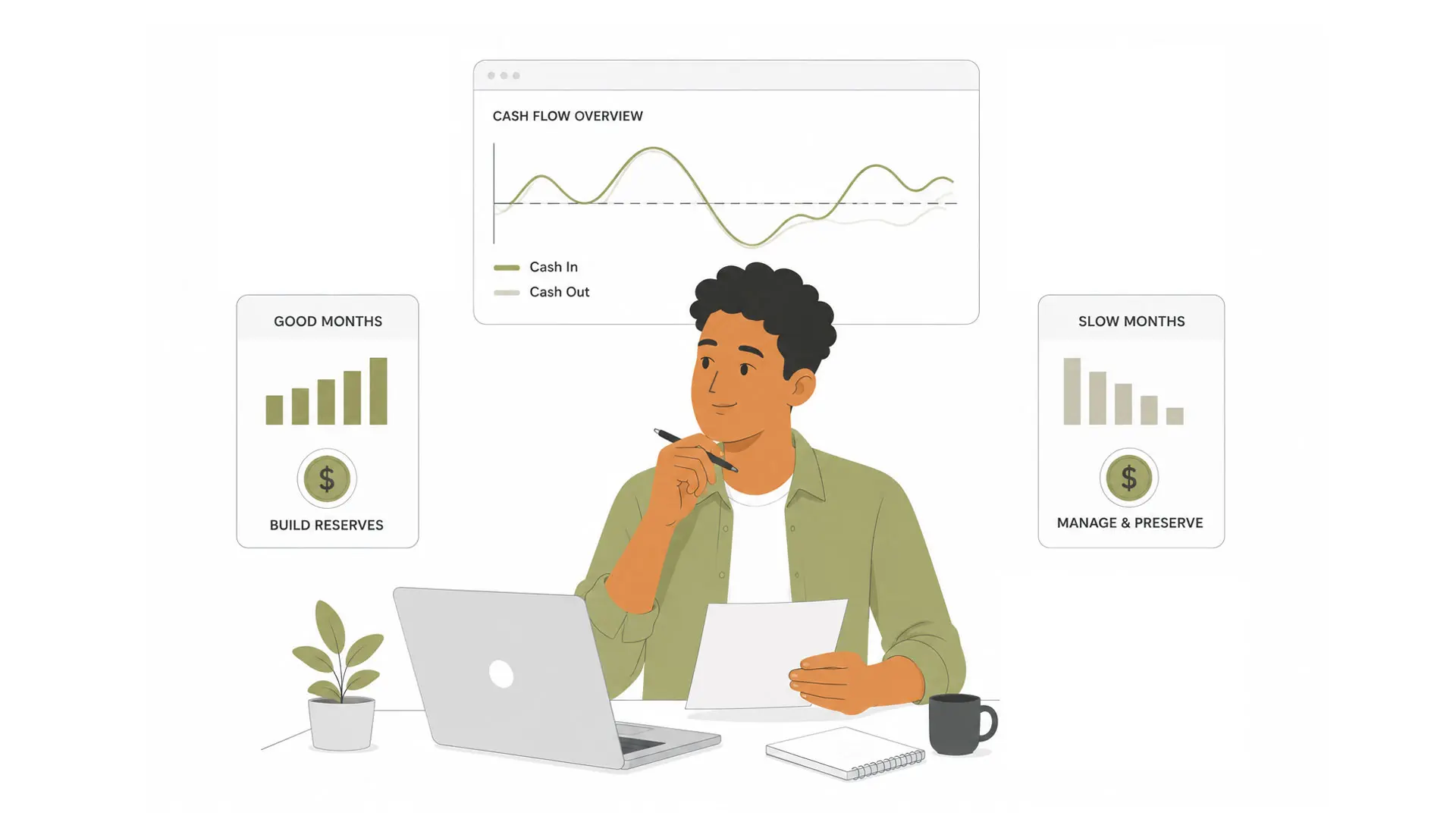


Many small businesses in Mauritius close not because they are unprofitable, but because they run out of cash.
Cash flow management refers to how money moves in and out of your business. Even if sales are strong, delayed customer payments, seasonal fluctuations or unexpected expenses can create liquidity gaps. A business can look profitable on paper while struggling to pay suppliers or salaries.
Staying liquid, meaning having enough cash available to meet short-term obligations, is what allows a business to navigate both good months and slow periods with stability.
Every business has a cash flow cycle. This cycle reflects how long it takes for money invested in operations to return as cash.
For example, you may need to purchase inventory today, sell it next month, and receive payment 30 days later. During that period, your cash is tied up.
To manage this effectively, small business owners should map out:
✔ When money leaves the business (suppliers, rent, payroll)
✔ When money enters the business (customer payments)
✔ How long receivables remain unpaid
Identifying gaps in this cycle helps anticipate liquidity pressure before it becomes critical.
Cash flow management for small businesses in Mauritius should always be forward-looking.
Instead of focusing only on current bank balances, prepare a rolling three- to six-month cash flow forecast. Estimate expected income conservatively and list all recurring expenses.
This forecast should account for:
✔ Seasonal sales fluctuations
✔ Tax payments
✔ Loan instalments
✔ One-off capital expenditures
A forward view gives you time to adjust spending, accelerate collections or explore financing options if needed.
During profitable months, it is tempting to reinvest aggressively or increase spending. While growth is important, liquidity protection is equally critical.
Setting aside a portion of profits into a reserve fund helps your business absorb slower periods. Even a modest buffer covering one to three months of fixed costs can significantly reduce financial stress.
This disciplined approach transforms good months into long-term resilience.
Late payments are a common cause of SME cash flow strain. To improve collections:
✔ Set clear payment terms in contracts and invoices
✔ Issue invoices promptly
✔ Follow up consistently on overdue accounts
✔ Offer structured payment methods
The faster you convert sales into cash, the stronger your liquidity position becomes.
Digital banking and payment solutions can simplify tracking and reduce friction in the collection process.
💡 Pro Tip: Through structured SME banking services, MCB supports small businesses with transaction monitoring and payment tools that enhance financial visibility.
Just as important as collecting payments is managing when and how you pay suppliers.
Where possible, negotiate payment terms that align with your receivables cycle. Avoid paying significantly earlier than required if it compromises liquidity.
However, balance this with maintaining strong supplier relationships. Reliable payment behaviour strengthens credibility and may improve future negotiation flexibility.
Cash flow management is not about delaying payments indiscriminately — it is about aligning inflows and outflows responsibly.
Despite careful planning, liquidity gaps may arise due to expansion, unexpected expenses or economic conditions.
In such situations, structured working capital facilities can provide short-term support. Depending on credit assessment and approval, options such as overdrafts or SME financing solutions may help bridge temporary cash flow gaps.
Establishing a business banking relationship early ensures smoother access to such facilities when needed.
💡 Pro Tip: Through comprehensive SME services, MCB supports entrepreneurs in Mauritius with banking and financing solutions aligned to operational realities.
Cash flow should be reviewed weekly, not quarterly.
Regular monitoring helps identify trends early. If expenses are rising faster than revenue or receivables are slowing, corrective action can be taken before liquidity becomes critical.
Strong cash flow management is built on consistency and awareness.
✔ Cash flow management, not profit alone, determines business survival.
✔ Mapping your cash flow cycle helps identify liquidity gaps early.
✔ Forecasting several months ahead improves financial control.
✔ Building reserves during strong months strengthens resilience.
✔ Structured banking and working capital solutions can support temporary gaps.
For small businesses in Mauritius, staying liquid through both good and slow months requires discipline, planning and structured financial tools. With strong cash flow management practices and the right SME banking support, entrepreneurs can operate with greater confidence and long-term stability.